 EnglishEnglish
Views: 0 Author: Site Editor Publish Time: 2026-02-15 Origin: Site


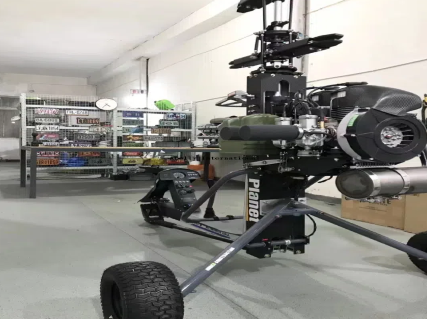
The aerospace industry is currently witnessing a significant shift in vertical takeoff and landing technology. While conventional helicopters have dominated the skies for decades, the limitations of the single-rotor design—specifically regarding speed and stability—have led engineers back to a concept that predates even the earliest successful tail-rotor aircraft. The Coaxial Helicopter, characterized by two sets of rotors mounted one above the other on a single axis, represents a sophisticated solution to the inherent torque issues of flight. This engineering marvel eliminates the need for a power-consuming tail rotor, allowing for a more compact and efficient airframe that is increasingly popular in both heavy-lift military applications and the emerging Ultralight Coaxial Helicopter market for personal and commercial use.
A Coaxial Helicopter is a type of rotorcraft featuring two counter-rotating rotors mounted on the same vertical mast, which effectively cancels out torque without the use of a tail rotor. This design provides superior lift capacity, exceptional stability in hovering, and a reduced footprint, making the Coaxial Helicopter and the specialized Ultralight Coaxial Helicopter ideal for high-altitude operations and confined landing zones.
The following comprehensive guide explores the intricate mechanics, historical evolution, and modern applications of this unique rotorcraft configuration. By diving into the technical nuances of the Coaxial Helicopter, we can better understand why this design is often considered the pinnacle of aerodynamic efficiency. From the heavy-duty Kamov models to the agile Ultralight Coaxial Helicopter designs used in modern agriculture and recreation, this article provides an in-depth analysis of how these machines operate and why they are gaining traction in the global B2B aerospace market.
How the Coaxial Helicopter Redefines Aerodynamic Efficiency
Technical Comparison: Coaxial Helicopter vs. Conventional Designs
The Rise of the Ultralight Coaxial Helicopter in Modern Aviation
Key Advantages of Coaxial Rotor Systems for Industrial Use
A Deep Dive into the Mechanics of Counter-Rotation
Future Trends and Maintenance for Coaxial Helicopter Technology
The Coaxial Helicopter achieves unparalleled aerodynamic efficiency by utilizing two sets of rotors spinning in opposite directions to neutralize torque, thereby directing 100% of engine power toward lift and propulsion rather than wasting energy on a tail rotor.
In a standard helicopter, the main rotor’s rotation creates a reactive torque that wants to spin the fuselage in the opposite direction. To counter this, a tail rotor is required, which typically consumes between 10% and 15% of the total engine power just to keep the aircraft straight. The Coaxial Helicopter removes this parasitic power drain. Because the two rotors spin against each other, the torque is balanced internally within the mast system. This allows the Coaxial Helicopter to lift heavier loads relative to its size compared to conventional aircraft.
Furthermore, the Coaxial Helicopter design solves the problem of "dissymmetry of lift," a common issue in high-speed rotorcraft flight. When a helicopter moves forward, the advancing blades move faster through the air than the retreating blades, creating uneven lift. In a Coaxial Helicopter system, there are advancing blades on both sides of the aircraft simultaneously (one from the top rotor and one from the bottom). This balance ensures that the Coaxial Helicopter remains stable even at high speeds, a feature that is particularly beneficial for the Ultralight Coaxial Helicopter models designed for precision tasks.
The efficiency of the Coaxial Helicopter is also evident in its hovering capabilities. Without the sideways thrust of a tail rotor, which often forces a pilot to hover with a slight tilt, the Coaxial Helicopter remains perfectly level. This level attitude makes the Coaxial Helicopter much easier to land on small platforms or uneven terrain, providing a safer environment for ground crews and cargo handlers.
When comparing the Coaxial Helicopter to conventional tail-rotor designs, the primary distinctions lie in the complexity of the transmission, the total lift-to-weight ratio, and the overall safety profile of the aircraft during low-altitude maneuvers.
The mechanical heart of a Coaxial Helicopter is its complex dual-swashplate system. Unlike a standard helicopter, the Coaxial Helicopter must control two separate sets of blades on the same axis. This requires a sophisticated gearbox that can split power and manage pitch for both rotors. While this adds some weight and maintenance requirements, the trade-off is a much more compact airframe. A Coaxial Helicopter can often fit into half the space of a conventional helicopter with the same rotor diameter, which is why the Ultralight Coaxial Helicopter is so effective for storage in small hangars.
| Feature | Conventional Helicopter | Coaxial Helicopter | Ultralight Coaxial Helicopter |
| Torque Control | Tail Rotor (Power Loss) | Counter-Rotation (No Loss) | Counter-Rotation (High Efficiency) |
| Lift Capacity | Moderate | High | Optimized for Payload |
| Stability | Variable | Exceptional | Superior for Beginners |
| Noise Level | High (Tail Rotor Whine) | Lower (Lower Tip Speeds) | Minimal |
| Size/Footprint | Large (Long Tail Boom) | Compact | Highly Portable |
Safety is another area where the Coaxial Helicopter excels. Tail rotor strikes are one of the leading causes of helicopter accidents. By eliminating the tail rotor, the Coaxial Helicopter becomes significantly safer for operations near buildings, trees, or power lines. This safety factor is a major selling point for the Ultralight Coaxial Helicopter, as it reduces the risk for private pilots and agricultural operators who may be flying in "dirty" environments with many obstacles.
The Ultralight Coaxial Helicopter has emerged as a disruptive force in the aviation market, offering a cost-effective and accessible entry point for operators who require the unique stability of coaxial rotors without the massive overhead of heavy military-grade machinery.
The Ultralight Coaxial Helicopter category typically refers to aircraft that fall under specific weight limits, allowing for easier certification and operation. These machines leverage the inherent stability of the Coaxial Helicopter design to provide a platform that is much more forgiving for novice pilots. Because the Ultralight Coaxial Helicopter lacks a tail rotor, the pilot does not need to constantly manage anti-torque pedals during power changes, which simplifies the flight experience significantly.
In industrial sectors, the Ultralight Coaxial Helicopter is becoming a go-to tool for aerial surveying, crop spraying, and infrastructure inspection. The ability of an Ultralight Coaxial Helicopter to hover in place with surgical precision—unaffected by the "tail-wagging" common in windy conditions for standard helicopters—makes it the perfect platform for high-resolution sensors and spray nozzles. Manufacturers are now focusing on carbon fiber components to keep the Ultralight Coaxial Helicopter within weight limits while maintaining structural integrity.
The market for the Ultralight Coaxial Helicopter is also driven by its lower operating costs. With fewer critical moving parts exposed (like long drive shafts for tail rotors), the maintenance schedule of an Ultralight Coaxial Helicopter is often more streamlined. Businesses looking to integrate aerial capabilities into their workflow find that the Coaxial Helicopter configuration offers the best return on investment due to its fuel efficiency and high mission success rate.
The primary advantages of a Coaxial Helicopter in industrial environments include its high power-to-weight ratio, its immunity to loss of tail rotor effectiveness (LTE), and its ability to operate in extreme weather conditions where conventional helicopters struggle.
Industrial lifting is where the Coaxial Helicopter truly shines. Because the entire diameter of the rotor system contributes to lift, a Coaxial Helicopter can lift heavier loads at higher altitudes and in hotter temperatures. This is vital for construction projects in mountainous regions where the air is thin. A conventional helicopter might lose tail rotor authority in these conditions, but a Coaxial Helicopter remains perfectly controllable because its yaw control is derived from the main rotors themselves.
Reduced Noise Signature: By having two rotors, each individual rotor can spin at a lower tip speed while still providing the same lift as a single larger rotor. This makes the Coaxial Helicopter much quieter, which is essential for urban industrial work.
Precision Handling: The Coaxial Helicopter responds instantly to pilot inputs for heading changes by varying the torque between the two rotors. This "torque-differential" yaw control is much faster than the pitch change of a tail rotor.
Compact Storage: Without a long tail boom, a Coaxial Helicopter or an Ultralight Coaxial Helicopter can be transported on a standard truck bed or stored in a small shipping container, reducing logistics costs for remote job sites.
Furthermore, the Ultralight Coaxial Helicopter variant is increasingly used for autonomous cargo delivery. The symmetric lift profile of the Coaxial Helicopter makes it an easier platform for AI flight controllers to manage. Whether it is delivering medical supplies or industrial parts, the Coaxial Helicopter provides a stable, reliable, and compact solution that traditional designs simply cannot match.
The mechanics of a Coaxial Helicopter rely on a sophisticated transmission system that drives two concentric shafts in opposite directions, allowing for balanced aerodynamic forces across the entire rotor disk.
To understand how a Coaxial Helicopter flies, one must look at the internal drive shaft. The inner shaft drives the top rotor, while an outer hollow shaft drives the bottom rotor. In a Coaxial Helicopter, yaw (turning left or right) is achieved by slightly increasing the pitch of one rotor while decreasing the pitch of the other. This creates a torque imbalance that turns the aircraft without changing the total lift. This mechanism is one of the most elegant solutions in fluid dynamics, making the Coaxial Helicopter a masterpiece of engineering.
In an engine-out situation, the Coaxial Helicopter and the Ultralight Coaxial Helicopter are capable of performing an "autorotation." This is a maneuver where the air moving up through the rotors keeps them spinning as the aircraft descends. The dual-rotor nature of the Coaxial Helicopter provides a very stable glide path during autorotation. Because there is no tail rotor to lose power, the pilot maintains full directional control all the way to the ground, which is a significant safety advantage for the Ultralight Coaxial Helicopter.
The vertical spacing between the rotors on a Coaxial Helicopter is a critical design factor. Engineers must ensure the rotors are far enough apart to prevent them from striking each other during aggressive maneuvers, but close enough to maintain the aerodynamic benefits of the "wake interference" that actually helps the bottom rotor perform more efficiently. Modern Ultralight Coaxial Helicopter designs use rigid rotor technology to minimize blade flapping, allowing for a closer spacing and a sleeker overall profile.
The future of the Coaxial Helicopter lies in hybridization and electrification, where the efficiency of the Coaxial Helicopter rotor system is paired with electric motors to create even more reliable and eco-friendly Ultralight Coaxial Helicopter models.
As we look toward the next decade, the Coaxial Helicopter is poised to lead the "Urban Air Mobility" (UAM) revolution. The compact nature of the Coaxial Helicopter makes it perfect for landing on rooftops and in small parking lots. We are already seeing the emergence of electric Ultralight Coaxial Helicopter prototypes that promise nearly silent operation and zero emissions. These advancements are made possible by the fact that a Coaxial Helicopter can be controlled with simpler electric actuators rather than complex hydraulic systems.
Rigid Rotor Inspection: Because many modern Coaxial Helicopter designs use rigid rotors, regular inspections for composite fatigue are essential.
Gearbox Monitoring: The transmission of a Coaxial Helicopter is more complex than a standard helicopter; therefore, oil analysis and vibration monitoring are key to ensuring longevity.
Blade Alignment: Ensuring the upper and lower rotors of an Ultralight Coaxial Helicopter are perfectly synchronized is vital for maintaining the smooth, vibration-free flight that these machines are known for.
In conclusion, the Coaxial Helicopter is much more than just a niche design; it is a highly optimized flight system that addresses the most difficult challenges of vertical lift. From the heavy-lift capabilities required by global industries to the personal accessibility of the Ultralight Coaxial Helicopter, this configuration continues to prove its worth. As materials science and propulsion technology continue to advance, the Coaxial Helicopter will undoubtedly remain at the forefront of aviation innovation.


