 EnglishEnglish
Views: 0 Author: Site Editor Publish Time: 2026-06-05 Origin: Site


Attempting to navigate shallow, vegetation-choked, or frozen waterways often destroys traditional marine propulsion systems. Standard outboard motors quickly clog. They overheat rapidly under heavy load. They suffer severe structural damage when operators push them beyond normal depth limits. Airboats effectively solve this pervasive draft and drag problem. They move all propulsion mechanics entirely above the water line. This strategic design protects expensive propellers from submerged hazards. However, this unique above-water configuration introduces distinct operational trade-offs. You will notice significant changes in vessel handling, overall fuel efficiency, and acoustic footprints. Navigators must weigh these factors carefully.
We will provide a clear, engineering-based comparison between airboats and traditional watercraft. You will explore mechanical differences, environmental advantages, and necessary operational realities. This comprehensive guide helps commercial operators, agencies, and navigators confidently finalize their vessel selection. You will understand exactly where each platform excels.
Zero-Draft Capability: Airboats can operate on inches of water, mud, or ice where traditional outboard motors would overheat or destroy their propellers.
Durability Factor: The modern aluminum airboat paired with polymer hull coatings offers unmatched impact resistance against submerged stumps and rocks compared to traditional fiberglass hulls.
Operational Trade-Offs: Airboats lack reverse gearing and submerged rudders, requiring specialized driver training for stopping and steering via thrust.
Environmental Specialization: Traditional boats remain superior for deep-water stability, fuel economy, and stealth, whereas airboats are strictly purpose-built for inaccessible transition zones.
Traditional marine propulsion relies entirely on fluid dynamics. Submerged propellers grip dense water to create forward thrust. This method offers excellent energy transfer. However, it requires a minimum operating depth. Airboats completely bypass this fundamental limitation. They mount massive aviation or automotive V8 engines directly on the rear deck. These powerplants spin large carbon-fiber or wooden propellers. Pushing air requires immense horsepower. Air is roughly 800 times less dense than water. Therefore, generating equivalent thrust requires much higher RPMs.
Standard marine engines utilize mechanical impellers. These pumps draw cool liquid through lower submerged intakes. Mud, silt, and aquatic weeds quickly clog these narrow passages. Catastrophic engine overheating follows almost immediately. Airboats eliminate this specific vulnerability entirely. They utilize closed-loop automotive radiators. Heat exchanges occur entirely through ambient airflow. Some builders even install dedicated air-cooled aviation engines. They never rely on surrounding water for thermal regulation. This guarantees continuous operation across completely dry ground.
Physics strictly dictate unique handling characteristics. Traditional boats steer using submerged rudders. They brake using direct reverse thrust from the transmission. Operators enjoy highly precise, low-speed directional control. Airboats steer via large aerodynamic rudders. These twin or triple rudders direct the powerful prop wash. You have no mechanical brakes available. Operators rely entirely on surface friction. Powering down creates drag to stop the vessel safely. You must anticipate stopping distances far in advance.
True zero draft means zero reliance on fluid depth. Buoyancy becomes entirely optional for forward movement. The wide, flat hull distributes weight over a massive surface area. This significantly reduces ground pressure. An airboat glides effortlessly over wet marsh grass. It conquers expansive mudflats. You only need minimal surface moisture for basic hull lubrication.
Submerged logs easily destroy traditional lower marine units. A single unexpected strike shatters aluminum props. It bends expensive drive shafts permanently. It often leaves crews stranded miles from navigable channels. A flat-bottom hull simply slides right over the exact same obstacle. The reinforced bottom deflects the impact. You barely register the physical bump inside the cockpit.
Search and Rescue missions demand ultimate vehicle versatility. First responders face highly unpredictable environments. Airboats transition seamlessly from open water environments. They move directly onto broken winter ice sheets. They navigate safely down flooded residential streets. Hidden fences and vehicles destroy traditional V-hulls instantly. Above-water propulsion keeps emergency rescue teams moving forward safely.
Follow these standard operational steps during winter SAR deployments:
Approach open water boundaries at a safe cruising speed.
Maintain steady throttle across shifting transition zones.
Glide directly onto solid surface ice sheets.
Navigate carefully around hidden urban structures during floods.
Power down slowly to utilize ice friction for braking.
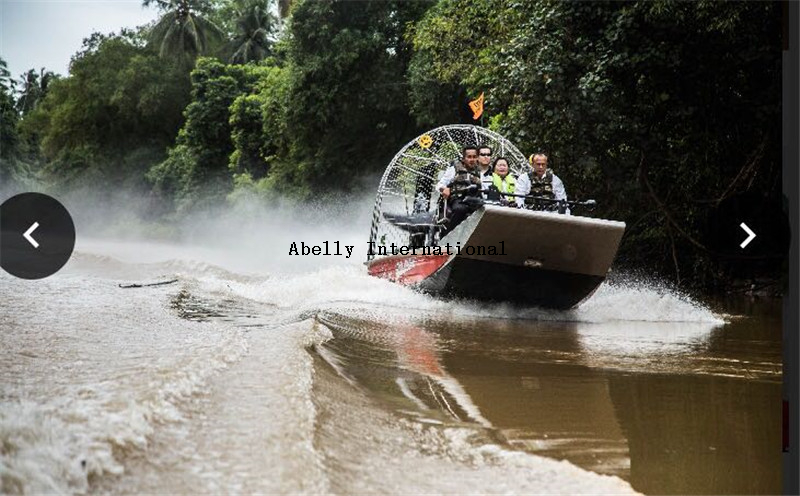
Commercial operators demand highly specific, rugged construction materials. High-end vessels default strictly to marine-grade aluminum alloys. Builders heavily favor 5086 aluminum for its superior tensile strength. Fiberglass poses unacceptable catastrophic failure risks in swamps. Hitting a hidden cypress stump easily shatters brittle fiberglass hulls. A well-built Aluminum Airboat simply dents and deflects. It absorbs blunt force trauma highly efficiently.
Heavy engine blocks mount high above the deck floor. This placement significantly raises the vessel center of gravity. Builders must engineer incredibly rigid internal support structures. They weld massive T-bar stringers inside the hull. They install heavily reinforced structural transoms. This rigorous framing prevents hull twisting during high-torque maneuvers. You maintain complete structural integrity during aggressive turns.
Raw metal creates too much ground friction on dry land. Builders bolt Ultra-High-Molecular-Weight (UHMW) polymer sheets underneath. This durable plastic material covers the entire hull bottom. Mechanics use countersunk bolts to prevent snagging on debris. The polymer acts like a giant, frictionless cutting board. It allows the vessel to slide seamlessly across abrasives. Rocks and gravel slide past harmlessly. The base aluminum remains completely pristine beneath the polymer armor.
Airboats generate incredibly substantial noise during operation. Sound levels frequently hit 90 to 120 decibels at full throttle. OSHA guidelines classify this volume as hazardous to human hearing. Hearing protection remains absolutely mandatory for everyone aboard. Buyers must check local noise curfews diligently. Many jurisdictions enforce very strict zoning restrictions near residential zones. You must verify compliance rules prior to purchase.
Pushing air demands exceptionally high energy output. Propelling a heavy vessel requires massive amounts of fuel. You must set realistic expectations for your daily fuel burn. A high-horsepower V8 engine consumes fuel rapidly under load. Operators often burn 10 to 15 gallons per hour. You must plan your fuel reserves carefully before embarking on long trips.
Standard outboards require highly strict winterization routines. Lower-unit gear oil changes happen frequently during the season. Airboat maintenance looks entirely different. It mirrors standard automotive or aviation maintenance schedules closely. You change engine oil regularly based on operating hours. You visually inspect carbon-fiber prop blades before every launch. You replace the hull polymer sheets every few years.
Routine Maintenance Comparison | ||
Maintenance Aspect | Traditional Outboard Boat | Specialized Airboat |
|---|---|---|
Cooling System | Clear water intakes frequently | Flush closed-loop radiator yearly |
Propulsion Check | Inspect submerged props for chips | Inspect carbon fiber blades for cracks |
Hull Care | Wax and buff fiberglass gelcoat | Inspect UHMW polymer bolt tension |
Winterization | Drain blocks, change lower unit oil | Standard automotive antifreeze check |
When should you choose a traditional marine vessel? Operating primarily in deep lakes requires standard displacement hulls. Coastal waters and heavy chop demand deep-V designs. Anglers targeting easily spooked fish require complete stealth. Wildlife observation demands minimal acoustic disruption. Precise, low-speed docking proves absolutely essential in crowded marinas. Traditional boats excel in these standard environments.
When should you invest in an Aluminum Airboat? Operating in water depths consistently under 12 inches demands specialized gear. Navigating dense vegetation, treacherous swamps, or tidal mudflats requires above-water thrust. Conducting commercial swamp tours daily demands ultimate durability. Executing emergency shallow-water rescues saves lives. You need an airboat to survive extreme friction.
Advise buyers to conduct a thorough site survey first. Map out your primary operating environment carefully. Check local acoustic ordinances before making final purchasing decisions. Schedule a practical test drive soon. Evaluate the distinct handling differences firsthand. Driving an airboat requires mastering a unique learning curve.
Vessel Capability Comparison Chart | ||
Capability Metric | Traditional Boat | Airboat Platform |
|---|---|---|
Deep Water Stability | Excellent | Poor |
Zero-Draft Navigation | Impossible | Exceptional |
Stealth / Low Noise | High | Very Low |
Obstacle Deflection | Low (Prop damage) | High (Polymer hull) |
Airboats serve as highly specialized navigational tools. They never replace general-purpose family vessels. An Aluminum Airboat stands as the ultimate solution. It conquers extreme, shallow, and debris-heavy environments confidently. Traditional watercraft simply cannot survive these hostile transition zones.
Consult an experienced custom builder immediately to discuss options.
Match engine displacement directly to your expected cargo payload.
Align your hull dimensions to specific environmental requirements.
Invest in premium hearing protection for all passengers aboard.
Schedule specific driver training to master thrust-based steering techniques.
A: Yes. Because of the low transom and heavy rear-mounted engine, taking a wave from the rear or stopping abruptly in deep water can cause swamping. They are not designed for rough open seas.
A: Yes. Because there is no friction-based steering in the water, steering requires active forward thrust. Stopping requires anticipating friction zones. A learning curve is mandatory.
A: Depending on use (dry ground vs. water), a high-quality UHMW polymer bottom typically lasts 3 to 5 years before requiring re-bolting or replacement.


