 EnglishEnglish
Views: 0 Author: Site Editor Publish Time: 2025-11-05 Origin: Site


Aluminum airboats are designed to glide effortlessly over shallow waters, making them perfect for swampy and marshy areas like the Florida Everglades. But how fast can these boats really go? Speed varies depending on the type and design of the airboat. In this article, we’ll explore the different speeds of aluminum airboats, from leisurely tours to high-speed racing models.
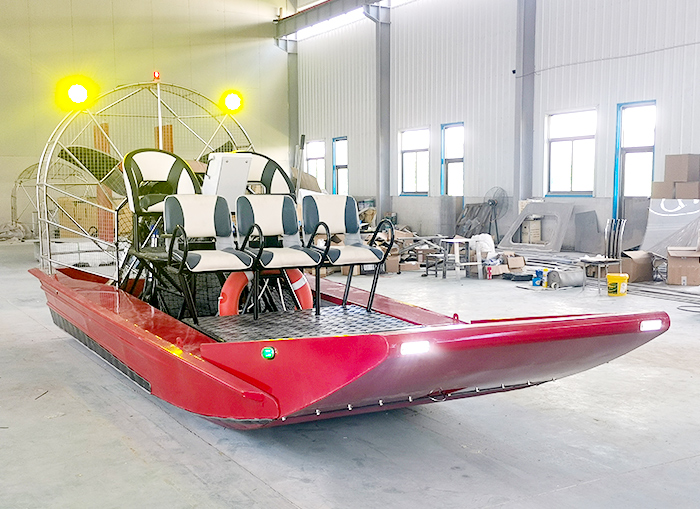
When it comes to speed, racing aluminum airboats dominate the scene. Designed with competition in mind, these boats are optimized to achieve maximum velocity. On a smooth, shallow water surface, they can easily exceed 135 mph. These airboats are stripped down to reduce weight, removing non-essential components that might impede performance. The focus is on maximizing power and minimizing drag, which allows them to reach mind-blowing speeds.
Racing airboats are powered by high-performance aircraft engines or specially tuned automotive engines, which are designed to produce greater horsepower than typical engines used in recreational boats. The propeller system also plays a crucial role; larger and more efficient propellers help push more air, thus propelling the boat forward at faster rates.
Example:
In airboat races, some boats can accelerate from 0 to 60 mph in less than 4 seconds, showcasing the raw power and speed potential these airboats possess.
Not all aluminum airboats are built for speed. Recreational airboats and tour airboats, such as those used for wildlife observation in places like the Florida Everglades, operate at lower speeds for safety and comfort. The typical speed range for these boats is around 40 mph. This is fast enough to provide a thrilling ride while ensuring passenger safety.
These boats are designed for smooth, enjoyable experiences, meaning stability is prioritized over sheer velocity. The engines in these airboats are smaller and more reliable, providing sufficient power to travel through marshes, swamps, and shallow waters. Although not as fast as racing models, they offer a more controlled experience that suits nature tours and leisurely rides.
Standard aluminum airboats are built for general-purpose use. These boats, typically employed for activities like fishing or recreational travel in swamps and wetlands, average 35 mph. Their speed is designed to balance performance and durability, making them versatile for both professional and recreational purposes.
Compared to racing and tour airboats, standard models are more adaptable, handling different terrains and weather conditions without compromising too much on speed. The engines are usually automotive in nature, offering moderate power suitable for everyday use in both shallow waters and land-based terrain when necessary.
One of the fascinating aspects of some aluminum airboats is their ability to transition from water to land. These land-capable models can reach speeds over 55 mph on dry surfaces, which is a significant increase compared to their performance on water. This adaptability is especially useful in regions where both swampy and land-based terrains are present.
Modified engines and additional torque are required to overcome the friction of land, allowing these airboats to maintain high speeds even in non-aquatic environments. However, the increased friction on land requires more power to sustain the same velocity, so these airboats are typically equipped with more robust engines.
Tip: If you’re looking for a boat that can handle both water and land, land-capable airboats are a good option. They provide the versatility needed for various environments.
Engine size and type are perhaps the most influential factors when it comes to the speed of an aluminum airboat. Larger, more powerful engines can provide the necessary horsepower to achieve greater speeds. Racing airboats typically utilize aircraft engines or high-output automotive engines, both of which are designed for maximum performance.
Aircraft Engines: These engines are often used in high-speed, competitive airboats. They can produce far more power than standard automotive engines, allowing the boat to reach higher speeds.
Automotive Engines: More common in recreational and standard airboats, these engines offer a reliable and efficient power source, though they usually don’t reach the speeds of aircraft engines.
The hull design of an airboat plays a significant role in its overall performance. Airboats are equipped with flat-bottom hulls, which enable them to glide smoothly over shallow waters without disturbing the ecosystem. However, a flat-bottom design also creates greater surface area contact with the water, which can cause drag at higher speeds.
To overcome this, lightweight materials like aluminum are often used to build the hull. The lighter the hull, the less effort required by the engine to propel the boat, making it easier to reach higher speeds. Additionally, the shape of the hull influences how efficiently the boat can glide over the water, with more aerodynamic designs reducing drag and boosting speed.
The propulsion system of an airboat, including the size and type of propeller, significantly impacts speed. A larger propeller pushes more air, providing more thrust and allowing the airboat to travel faster. The fan system is another critical aspect; a well-designed fan can reduce the resistance between the boat and the water, making it easier for the boat to move swiftly.
The propeller quality also affects the overall performance. Racing airboats typically use advanced, custom-made propellers, which offer higher efficiency and greater speed.
The condition of the water significantly impacts an airboat’s speed. Shallow, clear waters allow the boat to glide smoothly and achieve faster speeds. On the other hand, dense, murky waters or swamps create resistance, slowing the airboat down. The boat must exert more effort to overcome the friction and drag of the water.
In addition, terrain plays a role. Airboats designed to navigate both water and land have to be more powerful, as traveling on land creates more resistance. Mudflats, vegetation, or snow can also impede the speed of an airboat, so it’s important to account for these factors when choosing an airboat for specific conditions.
| Factor | Impact on Speed | Explanation |
|---|---|---|
| Engine Size | Higher engine power = Higher speed | Larger engines provide more horsepower, which allows faster speeds. |
| Hull Design | Lighter, aerodynamic hulls lead to better speed performance | A lightweight, streamlined hull reduces drag, allowing faster movement. |
| Propulsion System | Larger propellers = Faster speeds | Efficient, large propellers push more air, providing increased thrust. |
| Water Conditions | Shallow, clear water = Faster speeds | Less resistance in shallow water allows faster travel. |
Commercial airboat tours, commonly found in areas like the Everglades, usually operate at much lower speeds, generally around 40 mph. This slower speed ensures that passengers can enjoy the scenery safely while keeping the boat steady and easy to control. Operators also need to consider the water’s condition and the safety of the passengers, making high-speed travel unsuitable for tour boats.
Though airboats can reach impressive speeds, they require skilled operators to maintain balance and control. The lack of traditional brakes on most airboats means the operator must use the engine’s power to slow down and stop. This reliance on engine power to decelerate makes it crucial for the operator to be highly trained in managing high-speed conditions.
Airboats also tend to be unstable at high speeds, especially when navigating through tight turns or changing water conditions. The flat hull, which allows for smooth gliding over shallow waters, also makes the boat more prone to tipping at higher speeds.
Operating an airboat at speeds over 60 mph can be risky. The boat’s design, though ideal for shallow waters, is not made for the same stability as conventional boats or vehicles. At these speeds, the boat can become more difficult to control, particularly in rough waters or tight spaces. Moreover, the lack of brakes increases the risk, as the operator must rely entirely on skillful handling to slow the boat down.
Tip: Avoid exceeding safe speeds for recreational use. Racing airboats should be left to experienced drivers in controlled environments.
Racing airboats are built for performance, with modifications such as specialized hull designs, high-output engines, and lightweight materials. These boats can exceed speeds of 135 mph, but they are not suitable for everyday use due to their design limitations.
Example:
In the U.S. Airboat magazine, it’s highlighted that some of these high-performance airboats can go from 0 to 60 mph in just a few seconds, showcasing the immense power and speed they can achieve.
Standard airboats, while not as fast as racing models, can still be modified to improve their speed. By upgrading the engine, reducing weight, and improving the hull design, operators can increase the speed of a standard airboat. These modifications are often made for specific uses, such as rescue missions or professional races, but they come at a cost in terms of maintenance and efficiency.
At high speeds, steering becomes critical. Airboats are steered by vertical rudders that direct the flow of air pushed by the propeller. These rudders can be controlled by either a steering wheel or stick, depending on the design. At higher speeds, the rudders must be more responsive to ensure quick turns and stable handling.
One of the biggest challenges of operating an airboat at high speeds is slowing down. Without traditional brakes, airboat operators must use the reverse thrust from the engine or rely on the natural drag of the water and terrain to decelerate. This process can be difficult and requires careful control to avoid accidents or losing control.
Airboat racing is an adrenaline-filled sport, with records regularly being broken. The fastest recorded airboat speed is over 135 mph, achieved by racing models that are stripped down and highly modified for speed. These boats continue to push the limits of airboat engineering, showcasing the potential for speed in a boat designed to glide over water.
In recent years, airboat technology has advanced significantly. Innovations in lightweight materials, high-efficiency propellers, and engine performance have all contributed to increased speeds. Modern airboats are faster, more fuel-efficient, and more stable than ever before.
Aluminum airboats vary in speed based on design and use. Racing models offer thrilling speeds exceeding 135 mph, while recreational and tour boats are typically designed for comfort and stability, cruising around 40 mph. Key factors like engine size, hull design, and water conditions impact speed. For optimal performance and safety, selecting the right airboat for your needs is essential. Abelly offers airboats with advanced features, ensuring top performance and value for both enthusiasts and professionals.
A: Aluminum airboats can reach speeds ranging from 35 mph for general-purpose models to over 135 mph for racing airboats, depending on engine size and design.
A: The speed of aluminum airboats is influenced by engine type, hull design, propulsion system, and water conditions.
A: Aluminum airboats are designed for safety, but high speeds require skilled operators to maintain control, as they lack traditional brakes.
A: Some aluminum airboats are designed to travel on land and can exceed speeds of 55 mph, thanks to modified engines and increased torque.
A: For recreational use, aluminum airboats with speeds around 40 mph provide a good balance of performance, safety, and comfort.


