 EnglishEnglish
Views: 0 Author: Site Editor Publish Time: 2025-10-22 Origin: Site


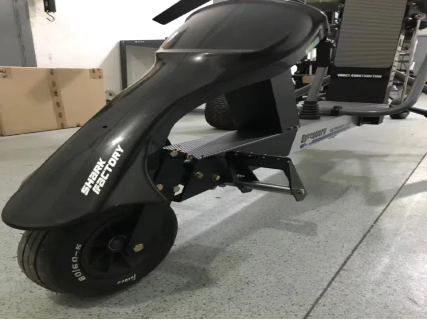
Coaxial helicopters are a remarkable innovation in aviation, offering enhanced maneuverability and design efficiency. Unlike traditional helicopters, they achieve yaw without the need for a tail rotor. In this article, we’ll explore how coaxial helicopters achieve yaw, and how this design provides significant benefits. You will learn about the mechanics, control methods, and advantages of this unique rotor system.
Yaw is the rotational movement of a helicopter around its vertical axis. This motion is essential for controlling the direction the helicopter faces without changing its altitude or forward speed. In traditional helicopters, yaw is controlled by the tail rotor, which counteracts the torque produced by the main rotor.
However, in coaxial helicopters, yaw is achieved differently. The two main rotors rotate in opposite directions, and this opposing motion cancels out the torque produced by each rotor. When the pilot wants to induce yaw, the rotor pitch is altered. By adjusting the pitch of the rotors, a differential in torque is created, resulting in yawing motion without the need for a tail rotor.
In traditional helicopters, the tail rotor's primary function is to prevent the aircraft from spinning uncontrollably due to the torque generated by the main rotor. The tail rotor is mounted on a tail boom at a 90-degree angle to the main rotor and is powered by the same engine. In contrast, coaxial helicopters use their counter-rotating main rotors to cancel out torque, avoiding the need for a tail rotor altogether. This design gives coaxial helicopters a significant advantage in terms of size and efficiency.
Yaw control in coaxial helicopters primarily relies on differential pitch control. The pilot controls the collective pitch of each rotor, adjusting them independently to create a difference in the torque generated by each rotor.
Pitch Adjustments: By increasing the pitch of the upper rotor while decreasing the pitch of the lower rotor, or vice versa, the pilot creates a torque imbalance. This imbalance results in yaw. The increase in pitch on one rotor produces more lift and torque, while the decrease in pitch on the other rotor reduces both. The difference between the two torque forces causes the helicopter to rotate about its vertical axis.
Creating Torque Differences: The differential pitch control essentially "unbalances" the torque from the two rotors. When one rotor’s lift increases and the other’s lift decreases, the resulting torque difference causes the helicopter to yaw. The amount of yaw can be finely controlled depending on how much pitch is adjusted on each rotor.
Maintaining Lift: Despite the yaw motion, the total lift remains constant. As one rotor generates more lift, the other generates less, balancing out the total lift and keeping the helicopter at a constant altitude. This allows the helicopter to rotate without any significant loss of performance or stability.
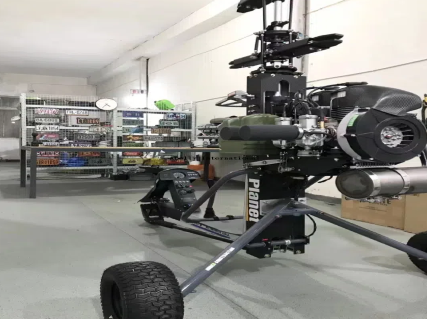
Differential collective pitch is the most direct and powerful method used to control yaw in coaxial helicopters, particularly in hover and low-speed flight conditions.
Pitch and Torque Control: In this method, the pilot adjusts the collective pitch of the two rotors. The collective pitch is the same for all the blades of each rotor and is altered simultaneously. By increasing the collective pitch on one rotor while decreasing it on the other, the torque produced by the rotors becomes unbalanced, causing yaw in the desired direction.
Hover and Low-Speed Yaw: Differential collective pitch is particularly effective when the helicopter is hovering or moving slowly. At these speeds, the rotor blades are more sensitive to pitch adjustments, allowing for precise yaw control without affecting other flight parameters such as lift or altitude.
The ability to control yaw effectively in hover conditions is crucial for tasks such as search and rescue, urban air mobility, and military operations, where the helicopter needs to stay in one spot while making minor adjustments to its orientation.
Differential cyclic pitch is another yaw control method used in coaxial helicopters, especially when the helicopter is flying forward.
Flapping Asymmetry: Cyclic pitch involves varying the pitch angle across the blades of a rotor during each rotation. When the cyclic pitch is different for each rotor, the lift produced by each blade varies, creating an asymmetry in aerodynamic forces. This asymmetry generates a yawing moment. For example, if the advancing blade of the upper rotor produces more lift than the retreating blade, it causes the helicopter to yaw in one direction.
Forward Flight Yaw: While differential collective pitch is effective in hover, differential cyclic pitch becomes more important during forward flight. At higher speeds, the airflow across the rotors changes, requiring adjustments to the cyclic pitch to maintain precise yaw control. This is particularly important during turns and maneuvers, where the rotor blades encounter different airflow patterns.
Differential cyclic pitch provides fine-tuned control over yaw and is essential for the smooth and efficient operation of coaxial helicopters in dynamic flight conditions.
Swashplates and modern fly-by-wire systems are key components that assist in managing yaw control in coaxial helicopters.
Swashplate Linkages: A swashplate is a device that allows the pilot to control the pitch of the rotor blades. In a coaxial helicopter, there are two swashplates—one for each rotor. The swashplates are mechanically or electronically linked to the pilot’s control inputs, adjusting the pitch of the blades as needed. Swashplates play a crucial role in enabling differential collective and cyclic pitch control.
Fly-by-Wire Augmentation: Fly-by-wire systems electronically control the movement of the swashplates and the pitch of the rotor blades. These systems replace the traditional mechanical linkages with electronic signals, providing smoother control inputs and reducing pilot workload. Fly-by-wire systems also automatically adjust the rotor controls to account for changes in flight conditions, such as speed and altitude, ensuring consistent yaw control across different flight phases.
Modern coaxial helicopters, like the Kamov Ka-50 and Sikorsky X2, use advanced fly-by-wire systems to enhance yaw control, providing more precise and responsive handling. These systems can also mitigate issues related to rotor interaction and aerodynamic forces.
The interaction between the counter-rotating rotors in a coaxial helicopter can complicate yaw control. These aerodynamic interactions occur because the rotors are in close proximity, with the airflow from one rotor influencing the other.
Induced Flow and Downwash: As each rotor spins, it generates downwash—the downward flow of air. The downwash from the upper rotor affects the airflow around the lower rotor, and vice versa. This interaction can cause imbalances in lift and torque, especially in hover and low-speed flight. In high-speed flight, the rotor interaction becomes even more pronounced, affecting the overall aerodynamic efficiency of the helicopter.
Compensating for Interference: To mitigate the effects of rotor interaction, modern coaxial helicopters use advanced control algorithms. These algorithms adjust the rotor pitch in real time to compensate for changes in aerodynamic forces, ensuring that yaw control remains smooth and stable despite the complex interactions between the rotors.
Managing yaw in high-speed flight is more challenging than in hover due to the changes in aerodynamic forces and airflow patterns.
Yaw Control at High Speeds: As the helicopter accelerates, the relative airflow across the rotors increases. This creates more lift and torque, which can affect yaw control. Pilots must continuously adjust the rotor pitch to account for these changes in aerodynamic forces and maintain stable yaw.
Active Differential Pitch Management: In high-speed flight, active differential pitch management systems are employed to adjust the rotor pitch automatically. These systems optimize yaw control by adjusting the pitch of each rotor in response to changes in flight dynamics, ensuring smooth yaw even during high-speed maneuvers. Helicopters like the Sikorsky X2 and Kamov Ka-52 are equipped with such systems, allowing them to maintain precise yaw control in challenging flight conditions.
One of the most significant advantages of coaxial helicopters is the elimination of the tail rotor, which simplifies the design and improves efficiency.
Compact Design: Coaxial helicopters are much more compact than their single-rotor counterparts. Without the need for a tail rotor or long tail boom, these helicopters have a smaller fuselage, making them ideal for operations in tight spaces, such as on ship decks or in urban environments.
Reduced Mechanical Complexity: The lack of a tail rotor reduces the number of moving parts in the helicopter, which means there are fewer components that can fail. This simplification of the mechanical system also reduces maintenance costs and improves overall reliability.
Coaxial helicopters are known for their superior maneuverability, especially in confined spaces where traditional helicopters might struggle.
Agility in Tight Spaces: The compact design of coaxial helicopters allows them to operate in areas where space is limited, such as aboard naval ships or in urban search-and-rescue missions. Their ability to achieve precise yaw control without a tail rotor makes them highly agile and capable of performing sharp turns and quick maneuvers.
Operating a coaxial helicopter requires a high level of skill and precision. The differential control of two rotors makes yaw management more complex than in traditional helicopters.
Need for Precise Control: The pilot must make fine adjustments to the pitch of both rotors simultaneously to control yaw effectively. This requires a deep understanding of the helicopter’s behavior and the interaction between the rotors.
Training and Expertise: Pilots need specialized training to master the control systems of coaxial helicopters. This training focuses on understanding how differential pitch control affects yaw, as well as how to handle the challenges posed by rotor interaction and aerodynamic effects.
Managing the two counter-rotating rotors simultaneously is a complex task. Pilots must account for the aerodynamic effects of rotor interaction, which can complicate yaw control.
Complex Control Mixing: The control systems in coaxial helicopters are more complex than those in traditional helicopters. Pilots must manage both rotors’ pitch adjustments to ensure precise yaw control, especially in high-speed flight.
Yaw Control in Various Flight Phases: Yaw control strategies vary depending on the phase of flight. In hover, differential collective pitch is the primary method, while differential cyclic pitch becomes more important during forward flight.
| Yaw Control Method | Description | Application | Advantages |
|---|---|---|---|
| Differential Collective Pitch | Adjusting the collective pitch on each rotor to create a torque imbalance | Hover, low-speed flight | Direct control, high yaw authority |
| Differential Cyclic Pitch | Varying cyclic pitch across rotor blades to create yaw forces | Forward flight, turns | Fine-tuned control, smooth turns |
| Swashplate Linkages | Mechanical or electronic systems controlling rotor blade pitch | All flight phases | Efficient, precise control |
| Fly-by-Wire Systems | Automated electronic control of rotor systems | High-speed flight, precise control | Smooth, automated adjustments |
Coaxial helicopters achieve yaw through differential pitch control, eliminating the need for a tail rotor. By adjusting the pitch of the two counter-rotating rotors, pilots create a torque differential that induces yaw. This method offers advantages such as a compact design and reduced mechanical complexity. However, coaxial helicopters require precise control and specialized training. As technology advances, coaxial rotor systems will continue to improve, providing even more efficient control. Abelly’s innovative products ensure precise yaw control, enhancing helicopter performance and operational efficiency.
A: Coaxial helicopters achieve yaw through differential pitch control by adjusting the pitch of the two counter-rotating rotors, creating a torque differential that induces yaw.
A: Coaxial helicopters don’t need a tail rotor because the counter-rotating rotors cancel out each other's torque, eliminating the need for a tail rotor to counteract rotational forces.
A: Coaxial helicopters offer a more compact design, reduced mechanical complexity, and enhanced maneuverability due to the absence of a tail rotor.
A: In coaxial helicopters, differential pitch control adjusts the pitch of each rotor independently, creating torque differences that result in yaw without affecting lift.
A: Yes, operating coaxial helicopters requires specialized training to manage the precise control needed for effective yaw control, particularly with differential pitch adjustments.


